The 2026 Refrigerant Transition: What Building Owners Need to Know
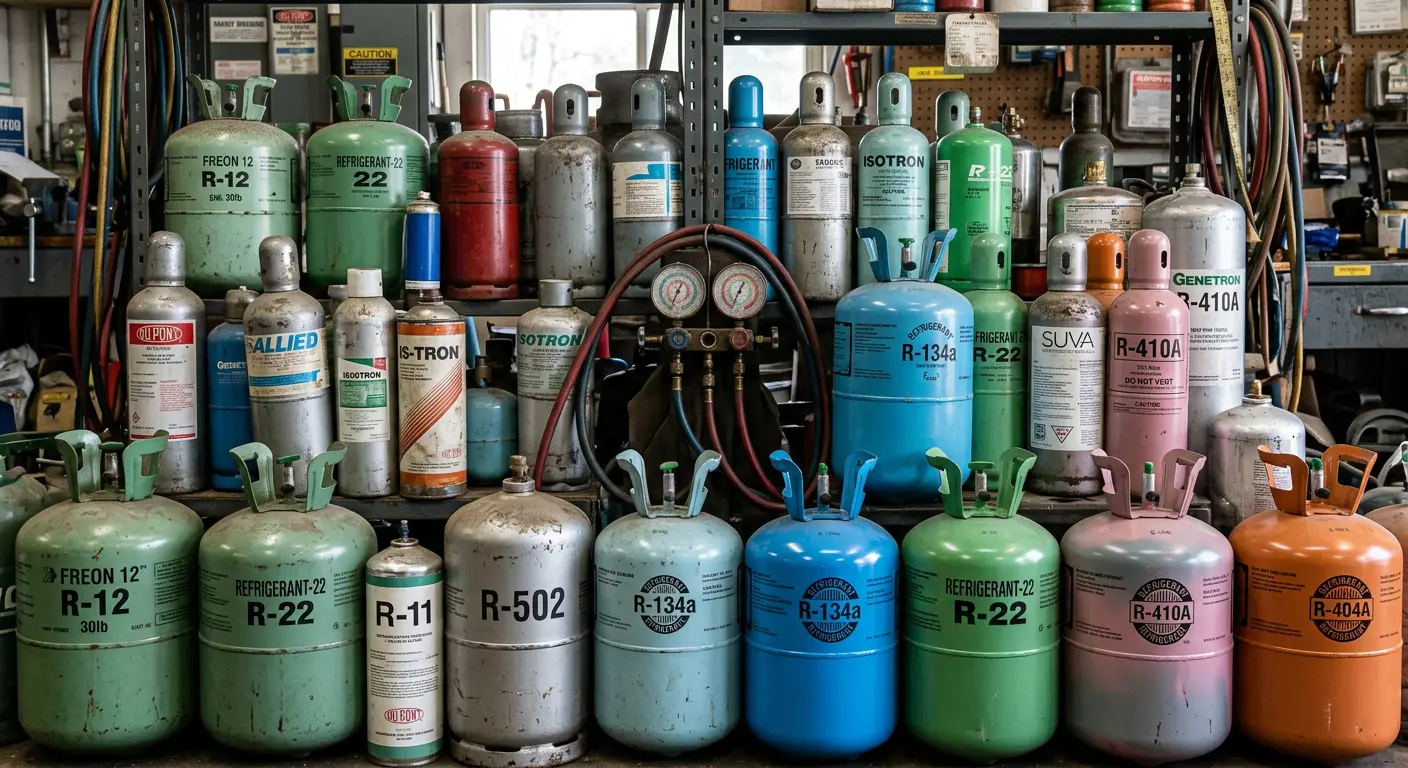
If you have a piece of equipment that ‘makes cold,’ it’s very likely using a refrigerant in that process. We can use slang for it – some people still call it ‘Freon’ – but getting more technical, it’s also called R-22, R-410a, or a host of other (ASHRAE) refrigerant designations. To stay more technical, refrigerant isn’t used to ‘make cold’ – rather, equipment takes advantage of the substance in two separate states of matter – liquid and gas (and the energy difference between them), to move heat around. Technically, we’re not ‘making cold,’ we’re ‘moving heat.’ From a physics standpoint, the best we can ever do is move heat from one area to another.
Anyway. *Adjusts Glasses*
Technically, lots substances can be a refrigerant. And a lot of things are! Carbon Dioxide, Ammonia, Propane – these are refrigerants used at gargantuan scales. But for systems that we work on most typically, manufacturers specifically optimized the classic R-### products for this purpose – at the scales that exist in most commercial and industrial buildings in North America. And for a long time, those R-### products were used without a lot of issues until we found out that the early ones designed were very harmful for the environment. Ever since, chemical manufacturing companies have been trying to design efficient, less-flammable, and more environmentally friendly refrigerants.
R-22 is a single molecule, which made it relatively straightforward to service because its composition does not change during a leak – but it’s terrible for the environment. Contractors and manufacturers installed R-22 in nearly every residential split system, rooftop unit, and heat pump from the mid-1980s through the early 2000s.. Because it contains chlorine, it contributes to ozone depletion.
R-410A came along, and while it was less harmful to the environment than R-22, it was one of the first refrigerant blends to achieve widespread adoption in residential and light commercial comfort-cooling systems. Which meant that when you had a leak, you had no way of knowing how much of one substance in the blend leaked out versus the other, causing responsible service companies everywhere to need to pull the entire charge from a unit with a known leak before recharging with fresh. So that’s mildly inconvenient – but that’s been the last 20 years or so. But even R-410a has a high global warming potential – enter the scene R-454B.
Manufacturers are now transitioning most newly manufactured comfort-cooling equipment to A2L refrigerants. R-454B is a good example, but others are R-32 and R-1234yf (seriously). The industry calls these ‘A2L Refrigerants’ – A for ‘Low Toxicity,’ ‘2L’ for being only mildly flammable. They’re hard to ignite, but we can’t say we’ve deliberately tried either. Because they’re mildly flammable, manufacturers design the units with leak sensors and enhanced ventilation, technicians have to use spark-free tools, compatible recovery and vacuum equipment, etc.
So what does this mean for building owners?
You don’t need to replace your existing equipment tomorrow. Just expect that as the prices of the legacy refrigerants increase, the math problem around ‘repair vs. replace’ is going to change. In fact, properly maintained R-410A equipment may have many years of useful life remaining.
A leak on your systems might be a bigger deal than it used to be. Simple leaks on really old pieces of equipment are going to get very expensive, and the blends that are used today require more time/expense to recharge after a leak is repaired.
But it’s not all bad news.
Newer Equipment Means Newer Equipment Capabilities. It’s not just a change of the ‘cold juice’ the system uses. Regulators have required manufacturers to add leak protection, safety controls, newer electronics, and adhere to new operating requirements. The systems are more efficient, are easier to diagnose than ever, and feature long-term regulatory compliance for clients sensitive to EHS on their owned equipment.
At Extra Mile Mechanical, we don’t view this as just another periodic hassle within our industry. Well, maybe we do, a little bit. But for us, this is just part of the broader evolution of our industry towards smarter and more sustainability-minded systems.
Do you know what kind of ‘cold juice’ your systems use? How do you address leaks at your facility? Whether or not you know the answers to these questions, calling Extra Mile Mechanical puts you in touch with someone that lives these exciting issues on the daily. Call us anytime to hear us geek out about it, or to answer your questions – 717-210-MILE, 24/7/365.